When a business needs a CRM
- requests get lost between email, messengers and spreadsheets;
- when a sales rep leaves, their customer base leaves with them;
- the manager can’t see what stage deals are at and why they fall through;
- contracts and invoices are drawn up manually, with errors.
What CRM implementation includes
- Sales audit: lead channels, stages, reasons for losing deals, roles in the team.
- Pipelines and stages with required fields at key steps and closing probability.
- Leads from every channel: website forms, incoming webhooks, emails from new senders.
- Automation: tasks and reminders for the rep, automations on stage change, discount approvals.
- Documents: contracts, invoices and acts generated from the deal card — with a product table and the amount in words.
- Analytics: conversion, deal cycle, reasons for losing, leads by source.
- Sales team training and sales gamification, so the CRM is actually used.
CRM in Folck
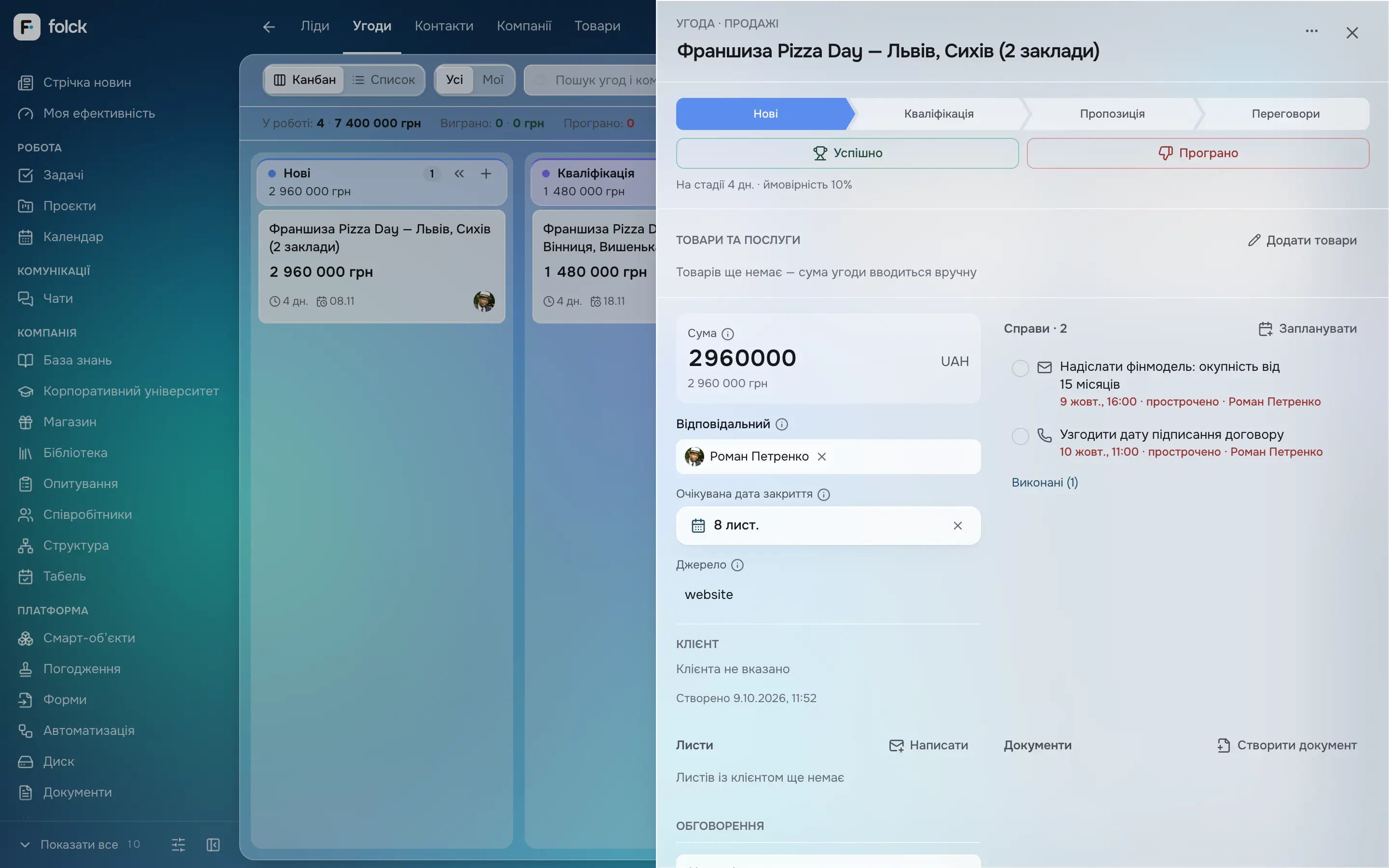
In Folck, the CRM is connected to everything else: tasks, processes, chats and documents.
- leads with conversion into contact, company and deal;
- deals on a kanban board with totals per stage, multiple pipelines;
- product catalogue and line items in the deal — the total calculates itself;
- finding and merging duplicates by phone, email and name;
- activities (calls, meetings, reminders) and Gmail emails in the customer card;
- custom fields, roles and permissions down to each action.